Showing posts with label utilitarian organization. Show all posts

Friday, March 30, 2012

Bureaucracy and Education


            Seeking knowledge is an important task in life, as education becomes the building block of any field in life, from planting to architecture and so on. Not knowing about sociological theories and how does it shapes our understanding of life could block us from seeing things that lies beneath the word ‘education’ or educational institutes.


            Educational institutes usually work with the same guidelines. They all have rules; they’ll ask you what to do and what to prevent yourself from doing. Therefore, students or faculties are not the ones who put the guidelines for their actions in the campus; the one who has the ‘control’ is the dean, the owner of the university or someone who is responsible for the education in the country. Therefore, educational institutes tend to be utilitarian organizations that are classified also as bureaucratic. Students go to school, universities or any other educational institute in order to seek knowledge or gain a degree; hence educational institutes are utilitarian. Educational institute put guidelines and goals for achieving a higher rank of education and students graduating with a high degree in order to compete with other institutes and raise their honor, therefore they’ve a goal or value to achieve by having a certain control on the students, so it’s bureaucratic.

            But is educational institutes being bureaucratic and utilitarian is beneficial or helpless? From the point of view of society, guidelines set by educational institutes can cause social conflicts, as some rules might seem fair to one and unfair to another. For example plagiarism, as some people might get affected if someone copied their work without them knowing and at the end, the plagiarist and the victim of plagiarism will be responsible. However, from the point of view of the functionalist, rules and guidelines are necessarily for helping people to achieve a certain point as they put certain tasks with certain deadlines so that employees or students won’t delay their work and would learn this much in this time. But that also bring us back to the fact of being controlled by these guidelines that are set by someone in a higher statues, therefore, we cant satisfy both sides, education always have a functional purpose and a conflict.

            Not only the large educational institutes such as universities have rules and guidelines, however, even school nowadays provides student with a small book full of guidelines and rules to be followed. When I used to be in primary school or even secondary school, in Qatar schools never had a full book that tells you what to do and what to prevent from doing, but when I got to high school at the year 2007, guidelines and rules were filing life. Not only my high school “Al-Bayan” had a book full of guidelines, but also online courses, social and educational centers…etc. all had policies. Having such policies, didn’t allow me or any other person seeking knowledge to do what we actually want to do, as we all had to do this and that at that certain deadlines and if we didn’t do things the same why, we fail. Therefore, it’s not a choice to follow what it is giving to us if we want the knowledge or the degree; it’s a must or else, game over. 
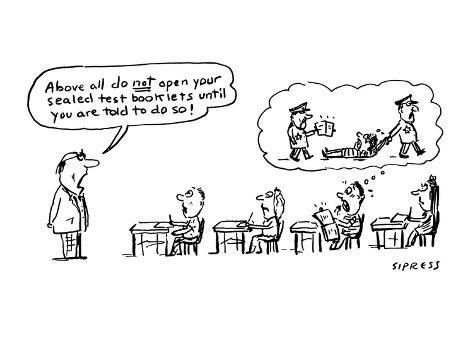

            In someway or another, we can’t do everything we want to do without following anyone’s rules. There is always someone who leads us around. Can be negative, but also positive, as if we break all the rules and we did whatever we wish, we lose organization in life as well as everyone will have his/her own revolution. 

Thursday, March 29, 2012

Is there more to ROTA than just the projects?


In sociology class we study a variety of topics by scanning through the chapters. I found the recent class to be the most interesting class from the previous classes. I say this because I learned something new and interesting that never captured my attention. We spoke about Organizations in terms of Formal and Informal organizations. The discussion looked at Voluntary organizations and Utilitarian organizations.  ROTA is an organization that best defines theses two kinds of organizations according to Sociology. 

“Towards Education for all…Today, Tomorrow, Forever” is there priority mission statement. I am currently a non-paid worker for ROTA (Reach Out to Asia) and this experience gives me a valid explanation of judging the type of Organization it is in our society. The organization has a hierarchy of employees where some are paid to run the organization, while most do voluntary projects to create awareness of the illiterate people who are less fortunate or hard working laborers to get proper education. My job in ROTA is to educate eighteen cleaning staff members of Education City twice a week. These workers are mostly recruited from Sri lank and possess low skills in communicating with their colleagues or people in charge of them in English. They fail to understand certain vocabulary that is very important in order for them to do allocated tasks.

Therefore, I am an individual who gives 2 hours of her time to help these workers learn a few English words, so that their bosses and employers have an easier time communicating with them. ROTA is also a utilitarian organization. A utilitarian organization indicates that the organization has a specific goal/ purpose and implies that some members get paid for running the few aspects of ROTA and is usually a matter of individual choice. I can strongly say this organization is not a Coercive organization. The aim of ROTA is to increase access to educationalfacilities in a crisis situation. The chairperson H.E Sheikha Mayassa bint Hamad Al-Thani and a few other Board members provide guidance and direction for the charity.

Since the organization is a utilitarian organization, this means they are Bureaucratic. A bureaucratic organization indicates that an organization has forms for everything, a lot of paper work, policies, procedures, and deadlines. This organization incorporates all of those attributes in order for an individual to be a non-paid employee, or part of a quick volunteer project. The organization strictly believes in their aim and ways to achieve that aim. The organization has to be bureaucratic because they are dealing with a large number of people of different knowledge skills and areas. They have to deal with the volunteers and the people who need the voluntary assistance. They have to try and get people to sponsor their notion and they work forward with that support and funding’s. Qtel and Vodafone are so far the most spoken about sponsors for the projects of ROTA.


ROTA is a non-profit organization, and thus there is a limit of trust and liability issues that have to be kept under control and supervised regularly. These benefits of having rules is a functional point of view, a positive way to see an outcome in every bureaucratic organization. There is an achievement, which is education that is given and received by a range of individuals.

Although, if there is too much bureaucracy pushed towards the organization, there tends to be negative issues with the organization called Social conflicts. The social conflict in ROTA is that there might be some Asian countries who do not get the privilege to receive the same sort of education everywhere. 

One reason to this is that they might not have enough students or people to do the voluntary work of teaching in those specific regions. Or, they might only get a visit of help once a year that has the possibility to hold an event of teaching. The picture of the Map above shows the different regions that ROTA has visited to help educate more illiterate individuals.

In Doha Qatar itself it becomes a social conflict because many Indian schools barely receive information about ROTA trips abroad or several local projects because the organization only picks people who have a certain amount of skills or study in Education City. Education City most of the time tries to get university or Qatar Academy students to participate in these projects, in order to build their Community and Serviceskills and approaches. The picture below is of a Carnegie Mellon University student teaching the cleaning staff of his University. As a teacher myself, I have noticed that there are no teachers from The College of the North Atlantic or Qatar University. The next picture identifies how serious ROTA takes their educational services because it shows the training sessions that occurred for all the upcoming teachers in Education City.

Visit this link to watch how Education city demonstrates enthusiasm for Reach out to Asia: http://www.youtube.com/user/reachouttoasiatv?ob=0&feature=results_main

“Make a Difference and take Action” says ROTA.

Thursday, November 10, 2011

Moving Planet Organization

Formal organizations are created by the society, there are two types of groups, primary and secondary groups which can be broken down into different categories. Primary groups are formed based on strong emotions; the main elements that make up the primary groups consist of family members and friends, where they highly impact the result of the group. Secondary groups can be influenced by the primary groups; they are usually larger organizations which relate to the community. The three types of secondary groups are usually larger organizations which relate to the community. The three types of secondary groups are; voluntary, coercive and utilitarian.

350.org is an organization established in the United States by Bill Mckibben. The number 350 relates to the amount of carbon dioxide in the atmosphere. The current level is 392ppm (parts per million) which must be reduced in order to save the planet. "350 is more than a number - it's a symbol of where we need to head as a planet". Therefore it is a voluntary organization aiming to fulfil one goal- to save the planet. The organization's members consist of individuals sharing a mutual interest with a non-profit goal.


350.org's organization has a vision to reduce the amount of CO2 usage, their mission is to raise awareness and head for a change in their everyday life. Individuals shape our society; the society can keep the planet safe. "We want to be a laboratory for the best ways to strengthen the climate movement and catalyze transformation around the world".

Using formal dimensions, 350.org gives individuals the freedom to establish events relating to climate change, "mass public actions are led from bottom up by thousands of volunteer organizers". The dimensions are volunteer-generated norms where they can by pass or violate the organization's rules. 350.org is a non-bureaucratic organization, and its success depends on the volunteer's creativity.

The success of 350.org can by proven by the number of individuals involved in making a change to the planet. In October 2009, more than 5200 actions have taken place in 181 countries. Each country creates events relating to their culture. The study of the society plays a large role in the success of the event; they are usually influence by the primary groups where emotion is influenced by family and friends.

As a project for my senior seminar class, I created a poster for a fake event in Qatar; I planned an event relating to the Qatari tradition and culture, aiming to raise awareness on 350ppm. While thinking critically of an event, I asked the older generations of how they lived in the past, before the development of fossil fuels etc. Qatar was not a developed country at their generation therefore they could reflect on their experience. I had a conversation to fully experience and understand the way they lived and how they would get around in Qatar. I also looked at existing events and how to promote the awareness. Since we can't solve the issue, we can only raise awareness. I looked at the marathons and the impact they leave, I noticed that even though it does not solve, it leaves an experience. I merged both ideas, marathon and older generation's experience to create a marathon using our old means of transportation in Qatar. Using Dhows and camels, the participants would understand the society and actually live the society as in the past. This event should affect their thinking and help them preserve the fossil fuels.


Below are examples of different events in different countries.