Showing posts with label sociology. Show all posts

Sunday, April 29, 2012

Separate but Equal


A paradox in the making of the world has shone light on a topic that the world suffers most from, Racism.

Racism is the belief that race accounts for differences in human character or ability and that a particular race is superior to others. For this blog post, I’m not only talking about Racism in the area of Race, but also in the area of stereotypes.

How can one be called a racist? Well, one must not tolerate the other race. Anyone can be called a racist these days. This is because everyone has ideas about other people. They are all socialized to believe that they are of one race and the others around them are different. Some people teach their children not to socialize with other children from different ethnicities or even races due to the fear of “Identity loss”.

How can one have an identity when one lives in such a diverse world? There are people in the same family that are of different races, let alone your next-door neighbors or your friends. Everyone is different; people need to seriously start realizing that!

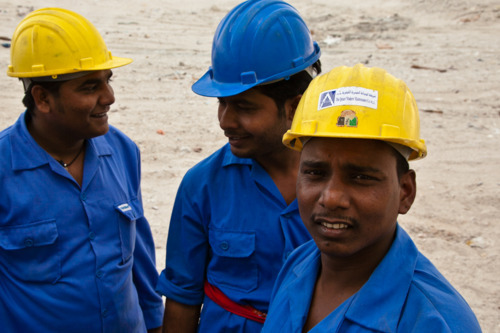
My latest project in my major class was about Labor workers in Qatar and how they live their social life. Out reporting for hours on end in this mild spring weather, I realized that there’s a lot that people don’t know about this place.

The workers had one day to socialize and they use that day to do their shopping, play cricket with friends and make the longest phone-call to their home country.

They are seen as single workers who are not allowed in on Fridays to Malls. Well, in this country, Friday is Family Day. They are seen as the workers who people don’t want to associate themselves with all the time, unless they have to.

If we actually think about it, these people are the ones putting their sweat and blood into building our nation and we repay them with what?! Little money! One day off! Living in poor housing, complexes outside the main city. They’re fine with all of that trust me! But then you even take away their privilege of being free to roam in the country they are building? Why?

An anthropologist, Ms. Rico said that it is “Violent” that these workers cannot enjoy the privileges that they are building for us. It really is a sad image to see when a worker builds the mall and when it is finally open, he is not allowed in to see his work complete.

Sociology has played a huge part in making this issue come to reality. The more people are socialized from their birth to be with the people they look like; this would never be a world with no discrimination, racism or hate!

Stereotypes are given to everyone from all races, there are even jokes made about these stereotypes. Humor and movies are used to shine light that not everyone is equal, but not everyone is separate either. I guess that’s what the workers would witness time and time again, they are equal with people, the citizens, but they are also very separate and living separate lives.

Wednesday, April 25, 2012

The Sensitive Man

In a sociology class this month, I decided that I would dive into the world of Woody Allen films. I had just watched Annie Hall and felt like my world was changed and then, I only wanted to watch movies with interesting plots and stories.


So I started with Manhattan and Small Time Crooks and I was more than entertained. My mother, who had no idea that I had been spending my time at college watching movies, told me over the phone once about a new movie named Midnight In Paris I soon found out that Woody Allen had directed it.


The beauty of Woody Allen’s movies is that it has not only taught me a lot about the sensitive man but the women in his movies and what they want. In all the relationships that his character enters into, the women are at first attracted to his sensitivity and quirkiness, but then grow bored of how his life is without any excitement.


Considering that I was already on a roll with all of these movies and my picky mother herself said that the movie was “sweet,” I could not wait until I could watch the movie for myself.
I borrowed the DVD and slipped it into the CD player on my laptop the minute I got to my room. I fell in love with the Paris like I never have before. Images one after the other filled the screen.
Owen Wilson is the new Woody Allen. The awkward manner in which he walked and the way he constantly over analyzed things, was true to the character of the now 77 year old. Throughout the movie, Wilson’s character Gil is a man who is in love with the glorious 1920’s American literature age. His emotions and thoughts are at the center of the movie’s agenda the way a chick flick would be for it’s female lead. Because of people like Gil, women have begun to accept and even embrace a new definition of man. It has become alright that men should be emotional and be able to cry at any moment and movies like this have been crucial to this change in society. I don’t know how I feel about this change. Sometimes I wish men would just own their manhood and be more stable than a woman but then, too many times I’ve wished that men could be a little less brick-like. I guess that’s why the hybrid man was invented by society.

Tuesday, April 17, 2012

Bombers or Billionaires?


When I lived in Canada I witnessed many different kinds of stereotyping. It seems like after 9/11 there was an increase in negative sanctions towards people of darker skin tones. Despite the actual ethnicity of the person, as long as you had a brown complexion you were targeted.

In our last Sociology class we discussed how the American film industry has projected these extreme images of people who live in the Middle East in order to escalate a culture of fear. Although there were always distorted images of Arabs in American movies since the late 20th century, the impact of these images became even more profound on audiences after 9/11.

Although Canada was not affected by 9/11, airports worldwide tightened security measures as a result of the tragic event. In general, elementary and high school kids are mean. But somehow the incident of 9/11 justified their meanness. In the narrow minds of these kids, everyone of a brown skin tone was Pakistani. And they would bully these poor kids, telling them to go back to where they came from, and even asking them if they were related to the Taliban. North American children were highly susceptible to moral panic. Moral panic makes exaggerated media images and messages so much more believable.


Arabs in the film industry are normally portrayed as “bombers, belly dancers and billionaires,” the three B syndrome. Prior to the 9/11 attacks, these images were extremely dominant. Living in Qatar for the past five years only showed one trait to be quite accurate: billionaires. Although there is more to the Arab culture than money, it is quite a distinguished characteristic. If Americans showed other aspects of the Arab culture in their movies, like their food, how they love shisha and how they are actually quite normal, it would result in a major loss to the film industry and not support the American justification for intervening in the Middle East.


The movie The Kingdom, released in 2007, is about a terrorist attack on a U.S. compound in Saudi Arabia and how American special agents go in and investigate. This movie depicts how Islamists are extremists and fanatics and justifies American resolve to be in the Middle East: Arabs are evil, and Americans are heroes. Arabs can be classified as folk devils, particularly for Americans. A folk devil is a term that’s applied to outsiders portrayed as responsible for creating social problems.


The film industry usually reflects American foreign policy. During the Cold War with Russia, many films depicted communists as evil and invoked a sense of fear, again contributing to this culture of fear. However after the Soviet Union collapsed, the U.S. changed its foreign policy to target the Middle East and coincidentally films reflected this change.

Sunday, April 15, 2012

Deviant art style?

Wherever you go, unless you go to Japan or Asian country, Anime will be looked down upon. whether it's just Anime, or Anime drawing style(Manga) or just anything related to anime.


But what I'm going to talk about in this post, is the deviance of anime style in the eye of westerners and western artists(mostly, and I'm not saying that all of them look down on anime art, but many do so).

I started to notice this problem when I started to attend university. I do not consider it a big problem, but I don't really feel comfortable when someone look down on anything I do ( since I draw in anime/manga style.) months ago, we had to draw a still life for our drawing class, Alhamdulle-Allah, my drawing was turning out quite well. My teacher noticed that I was doing pretty well so he approached me and asked whether I drew in regular basis or something, and I told him, "I try to draw everyday, I like to draw in anime style." just after I told him that, I felt like his face changed (not in a positive way) so, I just stopped talking after saying that sentence.
Not only that, but I get that negative vibe from some students as well. So I try not to talk about drawing with others unless I thought a person might not give me that vibe.

But since I have online friends from all over the world, I know that this problem is not only here, but it's rather spread. I have found blog posts about people with the same problem. (1-2)
People usually think that manga and anime style is just some people who just copy the Japanese animation and think of it as art, they think that each anime is the same and the style is just a copy of another. (But what if it was a copy? people actually learn many things from copying other works, it can also be called "inspiration", you can always copy but you can never claim that the piece you did is original. Artists back in Florence has been copying Roman architecture and monuments. why? because nothing produced is original, everything is a copy of a copy, of another copy.)
But what did they know? how can they say that all anime style is the same? [see picture below]


Why do some realism/drawing artists/professors think anime art is the 'lazy' style? why is it deviant to them? I seriously cannot comprehend that. I draw anime style, and I know what a person has to do to become better at drawing. First they should learn the anatomy (of almost everything, and how things work and function) and every professional anime artist practice anatomy, very much. Just like any kind of artist. Anime art requires hard work as much as any other form of art. It's certainly not lazy.


The Examples(pictures) above is mostly taken from anime series, but how about I show you anime art with a message and meaning to it?

Yuumei, is an anime artist who tries to convey messages and spread awareness through her art. Such as global warming, divorce, and many other subjects.


To conclude this post, I want to ask once again, why is anime art style considered deviant to many other artists? is it because the stereotype of anime style is the shiny-big-eyed-huge-forehead-cute-girls characters? or is it because it doesn't carry a meaning(which I should consider invalid, seeing Yuumei's art) or is it because people think it doesn't require hard work? does it do any harm to the society(I think not, just in some cases which is individual's fault, not the style) or is it because it's stylized and not realistic? (if that's the case, then why is Picasso considered one of the most well-known artist though his art was not very realistic?) But in the end, everyone has their own definition of 'Art' but they do not have to look down on certain styles with no good reason. 

Friday, April 13, 2012

Blinded by Classism

In life, there are people who are rich, people who are poor; some are well educated, while others are homeless with no educational skills. Having such variety in people’s life and skills created what is called in sociology as social stratification, in which people with higher skills and greater wealth are ranked in a higher places where as people who are less educated and less wealth are ranked at the bottom of the scale. Having social stratification created a map or a road for each individual’s life. Individuals are no longer the ones who choose what to work in, what to achieve or even where to live. However, that doesn’t mean that everyone is going with the flow of such classism.
Some people believe that no matter what your ranking scale is, you still have the chance to decide where to work and who to marry depending on your skills and personality. Such belief is usually depicted in Asian drama, especially Korean, as they tend to show that a lower class girl can marry a higher-class man and vise versa. Such story can be seen in the Korean drama “Secrete Garden”, where Gil Ra Im; a poor girl who is working as stuntwoman, preforming all the fighting and serious actions instead of others actresses, got to fall in love with Kim Joo Won, an arrogant CEO who has the image of perfectionist. 

Left: CEO Kim Joo Won - Right: Stuntwoman Gil Ra Im
(Korean Drama: Secrete Garden)

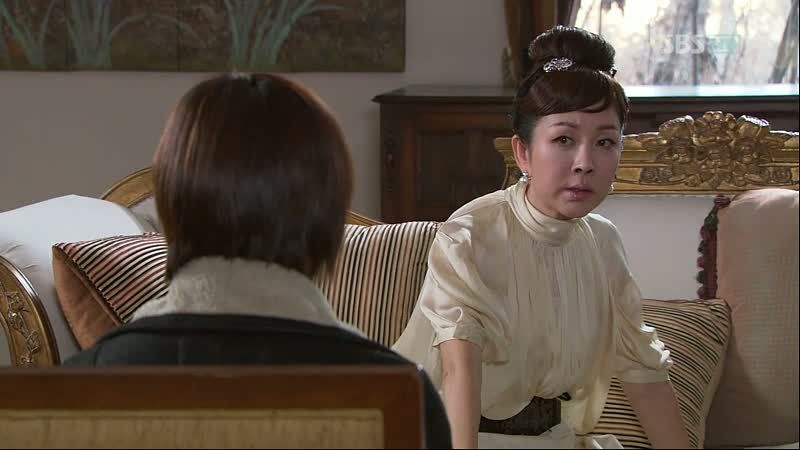
        That doesn’t mean that everything in their relationship went smooth, as the director showed the opposing side of the relationship, which was Kim Joo Won’s mother. Hence, we now can pull out where the consequences or opposing sides appears. Family comes first to follow classism, while society comes the second; however, they both depends on each others, as families are usually afraid of what other would think (Others = society), therefore, an individual struggle in order to overcome the power of society on his/her own life. 


Secret Garden - Kim Joo Won argument with his mother

Secret Garden - Kim's Mother trying to break them apart.

But, could such a story occur in real life? I think yes. People marrying someone with a less qualification in the ranking system, could overcome society issues, as the system is not constant and not permanent. Wealthy people can get bankrupted and become so poor, while poor people can gain skills and become rich. No one knows what life hides for us; therefore, people shouldn’t go with classism.

Money come and goes

That was for the marriage part, but what about the other fields in life, education is also a part of classism. People with higher wealth, are usually the one who get the higher education as they have the money. Money is the base of classism actually, as in society money gives power to the person, and it been like that since ages ago. For example, even during the French revolutions, wealthy people where the ones who were enjoying all the luxurious parts of life. Such power than created racism (slavery) and dominant powers.

Marie Antoinette Movie


Classism can be seen as a good thing in some people's eyes, however; they couldn't see the fact that classism causes different problems and issues between group of people or between individuals. They no longer see the individual him/herself, their personality, but they only see their social ranking, how much they've, how much knowledgeable they are. Not thinking of the facts that lead people with lower statues to have such a life is something that we usually do; we’re usually blind to think of such stuff. That’s why we have classism, because we can’t see what lies behind an image of a person. 

Gil Ra Im dressed up as rich lady - Secret Garden 


Gil Ra Im usual look - Secret Garden


Thursday, April 12, 2012

House Wives embrace change in their norms


In society today House Wives have been incorporating a relatively long list of characteristics of deviance. Their social status was defined as time came closer to the 21st century. This could be an uprising crisis because not only are women leading the media world, but they might end up being the head of the house. The video below will clearly show how Women could be close to the Social Media and the end of Gender. It is a Ted Talk that brightened my perspective on what women are capable of doing in the future.


Now that we saw how media is almost taken over by women, there is a connection I made with women who were house wives in history and were forced into a lot of labor because those were the norms set by people, and how the house wives of today, who are also working members are driving the social media.
Before Looking at the change in the norms of modern House wives, the history of the norms identified for the house wives are also important. Housework in America during the nineteenth century  was a range of harsh physical labor. To prepare a mean was difficult because it was time and energy consuming, since cooking was performed on a wood or coal burning stove.There were no thermostats to regulate the stove's temperature, which made the women keep a close eye on the fire all day an change the fuel accordingly. She would have to know how to cook unprocessed food like cleaning and killing a live bird/ chicken, green coffee had to be roasted before pounding, and cleaning all the mess the coal and smoke created from the cooking and light was tedious. Only, well-to-do families could afford cleaners, and cooks by paying them a few dollars. 
Although, time has brought us to a new standstill, House wives do not bother collecting coal or wood for fire in order to cook, they have the availability to electric or gas stoves, which works with just a click of a switch. 


Based on some research done on the Feminists' history of housewives, I found out that "Dr Bourke analysed the attitudes of about 5,000 women from 1860 to 1930 when, for the first time in Britain, it became the norm for women to be housewives. Previously most women had worked in factories, shops and farms". This is astounding but there is a reason why women accepted this norm.The change in the occupation, which was to move into the house was imposed on them against their will. As the wages got higher and men could afford it, the wives and daughters were forced to leave their jobs so that the men could make the family depend on him economically. This change came at a time when job opportunities were growing for women and the wages for women were rising faster than men.
Many posters were passed around to make more women embrace the idea of being a house wife, rather than an employed worker, as you can see below.

 Even quotes identify that the male figure and female figure grew very different from each other. This could even define the sociological perspective of such a rapid change.
“Any change in the nature of male and female roles thus automatically affects the home, the economy, the school, and perhaps above all, the definition of who we are as human beings.”
……William Chafe, A History of Our Time (224)

Government and business leaders created campaigns that convinced women that they should give their men their jobs because the men need it more than them since the war is over.  "Television and radio ads told women that they would be much happier if they went back home and had children and gave men their jobs back" were words taken from Chafe's point of view. 

Nevertheless, media has played its role in making a brand new perspective on what norms housewives today should look upon and almost abide by. The media that I am reffering to is the daily English series called Desperate Housewives. 

 
Desperate Housewives is an American television comedy-drama mystery series created by Marc Cherry. In brief it basically depicts six housewives who have been introduced to secrets that could corrupt their current relationships because it deals with affairs with other men, and it shows how some of the wives commit to their duties, and others are engrossed in their husbands money or generally in money, shopping, beauty, and the least care for their children. It shows acts where housewives engage in deviant behaviors that either hidden or exposed to the society in embarrassing ways. it creates a warning sign for people to be aware of their neighbors and keeping their enemies closer than their friends. This is one reason why House wives tend to be more lazy in their house work in the 21st century because they are inspired by television series. Even Indian television serials show two types of Housewives, one that is loyal and the other is a heavy headed house wife who tries to prove that she is better than the other. The name of the show is called Saath Nibhana Saathiya.
These shows effects the way housewives think and act. Technology is another cause to their introduction to more deviant behaviors. Some of the deviant behaviors could be shopping all day, instead of doing house work, lazing around and watching T.V most of their time or taking up a well paid job because women have realized that they are equal to men and can work as much, and doing tasks that do not relate to their norms in their social status. The norms are set by media and partly history. The organism that usually controls or judges the behavior of the house wives norms are the family members and for the most part their Mother in Laws and Husbands.
As this is a deviance, there are certain consequences to it, such as Sanctions defined by sociology. A sanction is an authoritative permission or approval for an action that is separated into four distinct categories. A formal Positive way, where the house wife is rewarded for being a good wife, though less used in cases for an house wife because a formal positive way looks at giving medals, or diplomas  or certificates. In this case, people do not usually give wives medals for being great wives. There is the formal negative way, where a person could receive a death sentence or punishments based on laws, in which case it would not be the case of a house wife to receive such sanctions unless they committed murder or other drastic crimes. Wives could get an informal positive sanction like a smile, hug, kiss or some extra love from her family members. Or, they could get informal negative sanctions where they are withdrawn from affection, isolated or even worst, physically abused which is a domestic violence.
In my experience, I see this as a relatively high crisis in my current life style. Having a maid in the house to do most of the work like cleaning, cooking, washing clothes, etc are so vital to keep a family going on with no stress or tiredness. In the culture I am living in today, a well-to-do family have several maids to run the behind-the-scenes work at home. There is one driver or more, three or more maids in one house and a separate gardener, and maybe a special Nani for each of the children in the house. It is not a huge culture shock for me because I have lived in Qatar my entire life and I proceed with some how a similar lifestyle. if people can afford to have a maid or cleaner, they certainly embrace the opportunity to make their work load less tiresome, giving them more time to relax more and have the chance to be a working member in the family.


Face - a reflection of beauty or deviance


  What is your face to you?  Is it a source of beauty or just reflection of who you are? A face not only distinguishes you from others but it also portrays your social identity. Seeing a person’s face you can tell which age group or gender it belongs, whether he/she resembles her mother or father. A person’s face can tell you whether the person is Asian, Black or White. A certain kind of social stratification is done in societies based on person’s appearance. A person’s personality and how he/she has been brought up in society can be easily told by by viewing their looks. Like for example one can easily associate a girl with well-applied makeup, wearing a black veil to be an Arab girl belonging to a respectable, rich Arab family and at the same time recognize a brown colored person to be Asian.

  But what if one day your face changes?  It is no longer the face of the same old you.  It no longer reflects your identity. In that case, not only you fail to recognize yourself but also the society disowns you. The society throws you apart and starts labeling you as a deviant. They also keep a distance from you.

  Similar is the experience for many women who fall victim to domestic violence. Shouting, calling bad names can be disturbing but not as threatening as being physically abused. Sometimes woman are harmed to such an extent that the dominant male figure decides to steal away the woman’s identity by destroying her face. The acid or kerosene is usually thrown on their face to kill their beauty. As the acids are corrosive it results into complete disfiguration and often immobility. In some cases, person also experiences loss of sight, hearing and speech. Some extreme cases can also result in death.

  Fakhra Yonus, a Pakistani woman committed suicide as she was so much disheartened by the acid attack on her by her husband Bilal Khar. The acid thrown on her face shattered her beauty and left her mentally shaken.


Another true story of Naseera Bibi, a 23-year-old woman talks about her brutal experience. She says that while she was sleeping, a bottle of acid was poured on her. She could feel the acid melt her skin, ate through her nose and both her eyes. She believes her husband was the culprit as she remembers his voice when he was throwing acid on her. However, with her face being physically damaged she now feels that she is a burden to the society.

  In sociology we know that in the male dominating society, people usually blame the woman even though it is not her fault. The society refuses to accept them and makes it difficult for them to fit in and live a normal human life. However, there are few groups of people in the society who go against the required norms, break the conformity and help these domestically victimized women. They share a different viewpoint than the majority of others. 

One such example is of Mussarat Misbah who is a makeup artist, owner of Depilex beauty salon and single mother but also she is a Philanthropist who has set up Smile Again Foundation in Pakistan. In this institute she not only gives shelter to female survivors of acid and kerosene oil burns but also sends them abroad for reconstructive plastic surgery. Also providing them with psychological/psychiatric support with vocational training she makes them stand on their feet and good enough to earn for their own living. We want every woman to look beautiful and for her to smile again, says Musarrat Misbah. Many of these burnt female survivors are working in Depilex beauty salon, having attained a beautician’s degree they are now helping beautify customers who come to their salon.

  Social Awareness regarding the acid attackers is gradually spreading in societies. There are various awareness campaigns set by NGO’s. Acid Survivors Foundation (ASF) is also now organized in Pakistan and is helping the burnt survivors with their reconstructive surgeries, catching the culprits and educating people in those societies about the traumas of these issues. They have made various documentaries regarding this subject and are making a point to personally spread the message in most of the educational institutions so that this topic is heard, considered and solved upon.


Sunday, April 8, 2012

Stereotypes of Americans in Khlaiji Drama

We always hear about Arab image and stereotypes in American films. Before 9-11, Arabs were portrayed as thieves, murderers, and ignorant. After 9-11, the term terrorist was added to the list. According to L Susan Williams and Travis W. Linnemann, Arabs in the movies were subjects to what some call "the three B syndrome" being portrayed as "bombers, belly dancers, or billionaires." (193). And the list goes on and on.
Anyhow, when watching Arab (Khaliji) drama, I notice that they, too, have stereotypes about Americans. American men are usually portrayed as feminine, soft, and with schemes to take over the protagonists' business. American women are portrayed as promiscuous, gold-diggers, and blonde. The appearance of Americans in old khaliji drama was rare. A character or two would appear throughout the series. However, in contemporary dramas, we see more American characters appearing as regulars.
In the Khaliji drama Droub Alshak the young male protagonist falls in love with an American girl when he was studying abroad, he brings her home to meet the family, but receives negative sanctions from the rest of the society. The girl was portrayed as a gorgeous blonde. She speaks little Arabic, merely to explain to the family that she is not here for the money, but simply because she fell in love with the man. Later in the show, she brings her father to Kuwait. Because the family of the man refuses to marry their son without meeting the family of the girl. Her father was portrayed as an ignorant old man who tries to convince his daughter of getting a share of the khaliji family's business. However he fails and gets sent away at the end.
The stereotypes about the American women still exist nowadays. Men who marry American women are frowned upon because it serves the stereotype of gold diggers. Another stereotype for American girls is being promiscuous. Society thinks that "yellow" blonde girls are unfaithful to their husbands, and that he should stick to the women in his own society, because they're "flawless." Overall, Arab stereotypes of American people do exist, and always will. Cultures of fear exist everywhere, in American and Arab societies. But why do we create our fears from celluloid images?

Saturday, April 7, 2012

Easter!


My family and I started our preparations for our Easter celebrations last night. There are several different symbols associated with Easter, three of the most prominent being the Easter Bunny, chocolate, and eggs. As Roman Catholics living in Qatar, we’ve brought over several of our traditions for celebrating Easter. One of these traditions, which is also my favorite, is Easter Egg Coloring.


In my family, we color and decorate the eggs the night before. Then, on Easter Sunday, we celebrate together at breakfast. During breakfast, we have an “egg-breaking competition,” which is basically done to find out who has the strongest egg. We basically go around and try to crack each other’s eggs. The last egg standing is the winner.

After our last sociology class about masculinity, I realized that my father resembled the “hybrid masculinity” during this little competition. My father is the only man in our immediate family. For as long as I can remember, my little sister, Joy, has always come out as the winner during these competitions. This is for one main reason: my dad does everything he possibly can to make sure she wins. He does this by taking everyone else out – he has a special way of holding the egg to make sure it doesn’t crack as easily. He also tends to cheat a bit when he hits other people’s eggs. However, whenever it’s just him and Joy left, he lets her win.


This made me think of the “Kindergarten Commando.” My dad feels a need to beat everyone out because he wants to prove his masculinity and macho-ism by being the strongest. However, at the same time, he also feels the need to take care of my little sister (his youngest daughter) and puts his macho-ism aside at the end to let her win.  Joy doesn’t really take well to losing…I remember the one year I managed to beat the both of them, she was so upset she kicked my winning egg right out of my hand. I had to watch in horror as it flew out of my hand and hit the floor, dead. My dad never did anything to punish her, either…

Through this tradition and competition, my father is able to play the role of both the protector and the caring father.


Happy Easter!


Thursday, April 5, 2012

Men, men, men, men, manly men, men, men!


In our latest Sociology class we discussed masculinity and cinema. The discussion was both entertaining and fascinating, considering that we only have two males in our class: a student and our professor. But seeing as the demographics of Northwestern University in Qatar is majority female, I found it really interesting to know more about males, who in our university are outnumbered.


Gender movements are almost always associated with women. No one really acknowledges men when it comes to their rights or the fact that they are also discriminated.


There is little doubt that there’s discrimination towards men. They do, in fact, make up the majority of inmates in prisons and work some of the most dangerous jobs in society. I was surprised to learn about a men’s rights movement in class. I think because I was under the impression that men have it made when it comes to getting good job positions. But then I understood that it was about more than just being a man. It was also about being a member of a particular race and social class too.


Usually race and social class are in correlation with each other. White men, when they aren’t in their home countries, tend to have better jobs than Indians in other countries, such as Qatar. Indian men in Qatar usually work as laborers or cleaners, not very glamorous jobs. There are those few Indian men who have good job positions but that’s mainly because they were raised in upper-class households. But in countries such as the U.S. there are white men who work in job industries such as construction or sanitation. There isn’t really an issue of pay with these types of jobs, but with the quality of the jobs.


We learned in class that there are three categories of men. There are some who are “soft” and sensitive, traditional and aggressive, and those who are a hybrid masculine. In society today, hybrid masculinity is accepted in comparison to men being sensitive or aggressive. Hybrid masculinity associates both muscle and compassion; so portraying a tough guy image, but also being caring and considerate of others.

We talked about different celebrities in class who fall under each category of men. Tupac was categorized as being hybrid masculine, while Bruno Mars and Twilight star, Robert Pattinson, almost fell short of being called men. However, I read in our sociology textbook that men in power, who have affairs with women, while they are married, tend to be seen as more manly. While sexual scandals can boost the masculinity of a man, physically abusing women will most definitely demean it.


The incident between Chris Brown and Rihanna in 2009 caused many people to dislike Chris Brown. Prior to them dating, he was pretty much a heartthrob and girls swooned over his music, particularly his very emotional lyrics directed at females.


“You changed my whole life
Don't know what you’re doing to me with your love
I'm feeling all Super human
You did that to me
Super human heart beats in me
Nothing can stop me here with you, superhuman”

These lyrics are from one of his songs called “Superhuman.” It’s kind of hypocritical that he can sing these kinds of songs yet still beat up his own girlfriend. Ever since the incident he was targeted in the media and became the butt of many jokes. The fact that he could hit a woman could have been an action to boost his masculinity, yet it backfired. Even today, Chris Brown continues to attempt to sweep women off their feet. Although many women were against his actions and it stirred up controversy over abuse, other women still continued to be “fan girls” and listen to his music.


Overall, what I learned is that men have rights too. Despite that they’re the ones who have the top positions in almost all kinds of work.