Showing posts with label control. Show all posts

Friday, March 30, 2012

Bureaucracy and Education


            Seeking knowledge is an important task in life, as education becomes the building block of any field in life, from planting to architecture and so on. Not knowing about sociological theories and how does it shapes our understanding of life could block us from seeing things that lies beneath the word ‘education’ or educational institutes.


            Educational institutes usually work with the same guidelines. They all have rules; they’ll ask you what to do and what to prevent yourself from doing. Therefore, students or faculties are not the ones who put the guidelines for their actions in the campus; the one who has the ‘control’ is the dean, the owner of the university or someone who is responsible for the education in the country. Therefore, educational institutes tend to be utilitarian organizations that are classified also as bureaucratic. Students go to school, universities or any other educational institute in order to seek knowledge or gain a degree; hence educational institutes are utilitarian. Educational institute put guidelines and goals for achieving a higher rank of education and students graduating with a high degree in order to compete with other institutes and raise their honor, therefore they’ve a goal or value to achieve by having a certain control on the students, so it’s bureaucratic.

            But is educational institutes being bureaucratic and utilitarian is beneficial or helpless? From the point of view of society, guidelines set by educational institutes can cause social conflicts, as some rules might seem fair to one and unfair to another. For example plagiarism, as some people might get affected if someone copied their work without them knowing and at the end, the plagiarist and the victim of plagiarism will be responsible. However, from the point of view of the functionalist, rules and guidelines are necessarily for helping people to achieve a certain point as they put certain tasks with certain deadlines so that employees or students won’t delay their work and would learn this much in this time. But that also bring us back to the fact of being controlled by these guidelines that are set by someone in a higher statues, therefore, we cant satisfy both sides, education always have a functional purpose and a conflict.

            Not only the large educational institutes such as universities have rules and guidelines, however, even school nowadays provides student with a small book full of guidelines and rules to be followed. When I used to be in primary school or even secondary school, in Qatar schools never had a full book that tells you what to do and what to prevent from doing, but when I got to high school at the year 2007, guidelines and rules were filing life. Not only my high school “Al-Bayan” had a book full of guidelines, but also online courses, social and educational centers…etc. all had policies. Having such policies, didn’t allow me or any other person seeking knowledge to do what we actually want to do, as we all had to do this and that at that certain deadlines and if we didn’t do things the same why, we fail. Therefore, it’s not a choice to follow what it is giving to us if we want the knowledge or the degree; it’s a must or else, game over. 
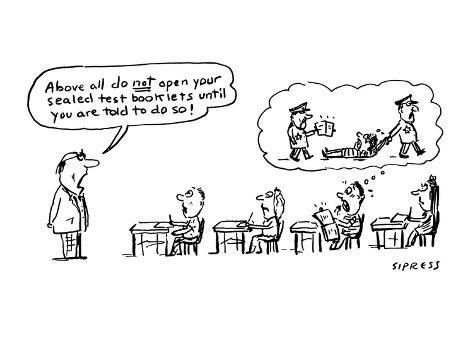

            In someway or another, we can’t do everything we want to do without following anyone’s rules. There is always someone who leads us around. Can be negative, but also positive, as if we break all the rules and we did whatever we wish, we lose organization in life as well as everyone will have his/her own revolution. 

Sunday, December 11, 2011

Cai Guo-Qiang Gunpowder's Project impact On Qatar


From November 2011 through December 2011, I’ve been working with Chinese Contemporary Artist and Curator; Cai Guo-Qiang, hosted by Mathaf: Arab Museum of Modern Art, Qatar. Cai initially began working with gunpowder to foster spontaneity and confront the suppressive, controlled artistic tradition and social climate in China.


While living in Japan from 1986 to 1995, Cai explored the properties of gunpowder in his drawings, an inquiry that eventually led to his experimentation with explosives on a massive scale and the development of his signature "explosion events". While I was participating in this project, I noticed that sociology has a very huge impact on the process was running on through the whole project. At the beginning, there was a huge discussion of hosting the Gunpowder Project here in Qatar by engaging the young generation with it, however, Mathaf has broke the norms by introducing the Gunpowder Project in Qatar. Everyone who heard about the huge explosion that is going to be held in Qatar got worried about it, however, the advertisement around Doha Town helped people to get engaged with the process of the project and actually people signed to participate in this new norm happening in Qatar.


From day one, I’ve been noticing many sociological aspects from culture, mcdonaldzation, to individuality vs. collectivism. Even though, it’s Cai’s individual artwork, he broke the norm by involving us the audience from China and Qatar, in his project by assigning us tasks to complete his work as a group instead. I found that he had assigned each participant with specific tasks and everyone would be working with efficiency, calculability, predictability under his control, which symbolize mcdonaldzation. On the other hand, the gender and ethnicity was not a problem with him at all. There were many people from this region and foreigners too collaborating in his project, which is a morality's gesture from him. By hosting here in Qatar I believe, he had a huge impact in spreading his culture through his Artworks by attracting the audience and engaging them to spread and share his values. I learned from this experience that, culture could be extent through many various ways rather than the old fashioned techniques; it needs only an influential vision and strength to accomplish the intention.


It's All over the News!!


The Project's Conclusion.

Tuesday, October 25, 2011

Mcdonaldization of Hamad Medical Corporation In Qatar

In reference to sociologist George Ritzer, Mcdonaldization is the “process by which the principles of the fast-food restaurant are coming to dominate more and more sectors of American society as well as the rest of the world.” He came up with four main principles that are leading fast-food restaurants and coming to dominate the society. The four leading components are: efficiency, quantification, predictability and control. These four principles may be applied to nearly every business cooperation and even social institutions. However, these four principles are greatly applied to hospitals and health care. The best example may be Hamad Medical Corporation in Qatar.


Going to the hospital and getting some health care tends to be a lot more simplified and predictable than it was before. Efficiency as one of the four main components of Mcdonaldization plays an important role within hospitals and healthcare. Efficiency is the service offered to allow consumers to move quickly from one state to another. For instance, back in the days patients knew their doctors on personal levels and had family doctors, whereas, nowadays, the relationship between doctors and patients are less personal and more efficient. The existences of appointments have increased the efficiency, rather than having patients turn up randomly without previous appointments. Some times patients have to call ahead of time book appointments. Other times, they may need to book an additional appointment to follow up. In addition, the roles of nurses play another essential responsibility in making Hamad Hospital more efficient. They tend to examine the patient, while the patient is waiting for their appointment. Sometimes, they even provide preliminary diagnosis without having to see the doctor. They actually have a room for preliminary examinations.

In order to process patients in an efficient cooperation, Hamad Medical Corporation needs to endure quantification and calculation. Quantification is the numerical indicators that enable consumers to evaluate a service easily. In this situation, the numerical indicators are the health card ID numbers, files, and even the numbers you get as soon as you walk to the reception of the hospital. This is when the patients gets their waiting numbers before even getting to the receptionist and inform them that they’re attending. Then, the receptionist would get their file ready by searching for the health card ID number. Obviously, we could infer that Hamad Hospital is not only using quantification and calculation, but also a scientific management to administer the hospital. Scientific management is the attempt to analyze the work and to identify the most efficient way to accomplish the given task. In this case, Taylorism comes into play, where everyone in the hospital has a specific role. The receptionist get files ready and the numbering machine counts and manage the patients without having long ques.


Predictability, consistency, discipline, routine and order are the principles I noticed at Hamad Medical Corporation. Predictability is the expectation that a service will be the same no matter what. In this instance, the predictability I encountered and noticed at Hamad Hospital was that individuals had their specific role and everything was in order. For instance, if I were to be a patient, Id know how to get an appointment and see a doctor. I would first call for an appointment, attend on the day, get a number, go to the receptionist in order for them to get my file ready, wait in the waiting area, have them call out my name, complete any necessary preliminary examinations, see the doctor and get a diagnosis in regards to the situation, and later on, get a follow-up appointment if necessary.

Last, but not least, control plays an extremely vital role within the health care system. In a sociological sense, “control is the guiding or regulating, by planning out in detail, the production or delivery of a service or product,”(Joan Ferrante 2011). Doctors have the final say in our well being, especially at the Hamad Medical Corporation emergency section. They make the final decision in extreme situations, where they decide on whether which patient is more critical and in more desperate need than another. For instance, in worse case scenarios, the doctors decide on transplants, blood donations and even with life/death circumstances.


Efficiency, quantification, predictability and control are all four main driving forces behind Mcdonaldization. The simple process of Mcdonaldization has come to dominate other industries of the society. The sociologist George Ritzer invented the term Mcdonaldization and the sociological phenomenon of the rationalization of institutions and our society. But, this is not where it ends; the process could possibly be applied to every aspect of our lives, even with listening to music and shopping.


Monday, October 24, 2011

Cinema in Qatar


A decade ago the cinema business here in Qatar was very small. The biggest cinema, Al-Khaleej cinema, had two theaters only! However, if we look at cinemas in Qatar today we can see that one cinema can have more than 13 theaters.

It is easy to see today how the principles of McDonaldization are dominating cinemas in Qatar today. Cinemas are trying to become efficient more than anytime before. If we take the cinema at the Villagio Mall, you can see they have more than four ordinary counters along with a specialized counter for the balconies and the IMAX Theater.
At these counters the booking takes place through a computerized system where a screen shows you the available seats in the theater, and you get to pick which seat you want. in addition, if you want to go watch a movie, you can go to the online cinema guide and check for the screening times.

Furthermore, there is a clear division of labor. One worker sells you the ticked outside, and when you go inside another person cuts your ticket right at the gate that leads you to all the theaters, and at last you’ll find a different person checking you ticket when you enter the theater to show you where you are supposed to sit.

Moreover, they have many sorts of food and beverages offered for sale before entering the theater. These include popcorn, soft drinks, shakes, chocolates, cupcakes, cookies, hot corn, nachos with cheese and jalapeño. It is very important to mention the globalization of eating food at the theater. This globalized norm applies mostly to popcorn andcoke.


We can also see the quantification and calculation in the different options they offer to their customers, ones that weren’t available before. Some movies are offered in an ordinary theater,3D, or in the IMAX Theater, where the last costs the most and the first costs the least, corresponding to the quality. Moreover, there are three theaters with balconies that offer bigger seats for a higher price.

Regarding predictability, the customer expects to see the same movie if he or she went to any theater, if its not the IMAX. Moreover, you always expect the food to taste the same, and when you go for a movie in the IMAX Theater or book a seat in the balcony you expect a better overall experience.

Moving to control, despite all the deviance that goes around, people are not allowed to bring food from outside, which keeps them limited with the food offered at the cinema that is much more expensive compared to the prices outside. But as I said, many people sneak their food in their purses. Moreover, if you buy a ticket you cannot return it or change it for another ticket.

Thursday, October 20, 2011

McDonaldization of The Music Industry


George Ritzer, is the great mind behind the term McDonaldization. It can be used to describe the functioning of different formal organizations, such as hospitals, shopping centers, or even universities. However, I’ve decided to look at the McDonaldization of the music industry.

There are four principles of a fast food restaurant that Ritzer discusses in his talk about McDonaldization are: efficiency, quantification and calculation, predictability, and control. All of there principles can be applied to the music industry and how, if you look close enough, it functions just like a McDonald’s.

The way that the music industry applies the principle of efficiency is as follows. They want to be able to make megabucks by selling their artists’ music, so they make sure that they music that they are producing is the most productive and appealing to their targeted audience. They offer the best music that they can offer to their consumer to satisfy their needs as they are their primary source of income, and if their productions were not efficient and sufficient then they wouldn’t have a job anymore. For example: the producers of an album know that the most efficient time to sell a Christmas album is more than likely to be around the holidays, and not during the summer, therefore they are being efficient in making sure that they don’t waste their resources.

Next on the principle list comes quantification and calculation. This particular principle is applicable to several different aspects of the music industry. The notion that more is better can be viewed two different ways, and in both be seen as ways of quantification. The first way is by looking at the number of albums they sell, and subsidiary to that all the other merchandize they come up with. To the consumer they get more for their money when they buy the album on iTunes. If they didn’t know about the extra material online and actually bought the actual CD first then they will have to buy the whole album again in order to get the material, thus the music industry gets more. The second way of looking at this principles is can be looked at as quantity over quality. There are numerous artists in the industry, and a majority of them are very similar. At one point Christina Aguilera, Britney Spears, and Jessica Simpson were all very similar. As if they were mass-produced artists, thus more of the same artists as opposed to a few really gifted ones.


Predictability. When thinking about the music industry it is pretty predictable when it comes to what you get from it. It starts off with a lot of promotion for a new artist, after that comes a first single, the album is released, maybe a couple more singles, that artists is an opening act for a while, they get their own tour, and work on their second album begins. Or at least something along those lines when an artist is actually signed to a label. As consumers we know that the most popular songs usually come out during the summer, and that’s when we expect the artists to come out with the best that they’ve got. We know what to expect from a boy band (though not many good ones exist nowadays), what Beyoncé is going to sound like, and what country music is like. It’s the way the industry functions that makes it predictable in a good way.

Last but not least comes the principle of control. This is where the music industry actually regulates what comes out of it and how that goes about happening. They make sure everyone is doing their particular job to the best of their abilities. Everyone does what they need to do in order for the organization to function properly, and if one person makes a mistake it can result in failure.

McDonaldization can be seen everywhere in society and the music industry is no exception. Question is, how much more can society take of it?