Showing posts with label media. Show all posts

Tuesday, April 17, 2012

Bombers or Billionaires?


When I lived in Canada I witnessed many different kinds of stereotyping. It seems like after 9/11 there was an increase in negative sanctions towards people of darker skin tones. Despite the actual ethnicity of the person, as long as you had a brown complexion you were targeted.

In our last Sociology class we discussed how the American film industry has projected these extreme images of people who live in the Middle East in order to escalate a culture of fear. Although there were always distorted images of Arabs in American movies since the late 20th century, the impact of these images became even more profound on audiences after 9/11.

Although Canada was not affected by 9/11, airports worldwide tightened security measures as a result of the tragic event. In general, elementary and high school kids are mean. But somehow the incident of 9/11 justified their meanness. In the narrow minds of these kids, everyone of a brown skin tone was Pakistani. And they would bully these poor kids, telling them to go back to where they came from, and even asking them if they were related to the Taliban. North American children were highly susceptible to moral panic. Moral panic makes exaggerated media images and messages so much more believable.


Arabs in the film industry are normally portrayed as “bombers, belly dancers and billionaires,” the three B syndrome. Prior to the 9/11 attacks, these images were extremely dominant. Living in Qatar for the past five years only showed one trait to be quite accurate: billionaires. Although there is more to the Arab culture than money, it is quite a distinguished characteristic. If Americans showed other aspects of the Arab culture in their movies, like their food, how they love shisha and how they are actually quite normal, it would result in a major loss to the film industry and not support the American justification for intervening in the Middle East.


The movie The Kingdom, released in 2007, is about a terrorist attack on a U.S. compound in Saudi Arabia and how American special agents go in and investigate. This movie depicts how Islamists are extremists and fanatics and justifies American resolve to be in the Middle East: Arabs are evil, and Americans are heroes. Arabs can be classified as folk devils, particularly for Americans. A folk devil is a term that’s applied to outsiders portrayed as responsible for creating social problems.
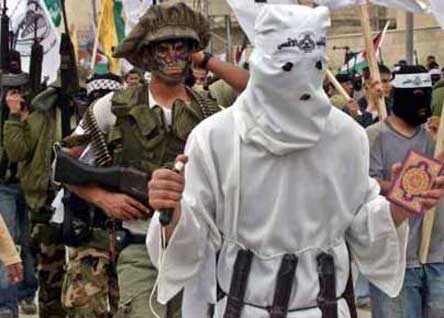


The film industry usually reflects American foreign policy. During the Cold War with Russia, many films depicted communists as evil and invoked a sense of fear, again contributing to this culture of fear. However after the Soviet Union collapsed, the U.S. changed its foreign policy to target the Middle East and coincidentally films reflected this change.

Thursday, April 12, 2012

House Wives embrace change in their norms


In society today House Wives have been incorporating a relatively long list of characteristics of deviance. Their social status was defined as time came closer to the 21st century. This could be an uprising crisis because not only are women leading the media world, but they might end up being the head of the house. The video below will clearly show how Women could be close to the Social Media and the end of Gender. It is a Ted Talk that brightened my perspective on what women are capable of doing in the future.


Now that we saw how media is almost taken over by women, there is a connection I made with women who were house wives in history and were forced into a lot of labor because those were the norms set by people, and how the house wives of today, who are also working members are driving the social media.
Before Looking at the change in the norms of modern House wives, the history of the norms identified for the house wives are also important. Housework in America during the nineteenth century  was a range of harsh physical labor. To prepare a mean was difficult because it was time and energy consuming, since cooking was performed on a wood or coal burning stove.There were no thermostats to regulate the stove's temperature, which made the women keep a close eye on the fire all day an change the fuel accordingly. She would have to know how to cook unprocessed food like cleaning and killing a live bird/ chicken, green coffee had to be roasted before pounding, and cleaning all the mess the coal and smoke created from the cooking and light was tedious. Only, well-to-do families could afford cleaners, and cooks by paying them a few dollars. 
Although, time has brought us to a new standstill, House wives do not bother collecting coal or wood for fire in order to cook, they have the availability to electric or gas stoves, which works with just a click of a switch. 


Based on some research done on the Feminists' history of housewives, I found out that "Dr Bourke analysed the attitudes of about 5,000 women from 1860 to 1930 when, for the first time in Britain, it became the norm for women to be housewives. Previously most women had worked in factories, shops and farms". This is astounding but there is a reason why women accepted this norm.The change in the occupation, which was to move into the house was imposed on them against their will. As the wages got higher and men could afford it, the wives and daughters were forced to leave their jobs so that the men could make the family depend on him economically. This change came at a time when job opportunities were growing for women and the wages for women were rising faster than men.
Many posters were passed around to make more women embrace the idea of being a house wife, rather than an employed worker, as you can see below.

 Even quotes identify that the male figure and female figure grew very different from each other. This could even define the sociological perspective of such a rapid change.
“Any change in the nature of male and female roles thus automatically affects the home, the economy, the school, and perhaps above all, the definition of who we are as human beings.”
……William Chafe, A History of Our Time (224)

Government and business leaders created campaigns that convinced women that they should give their men their jobs because the men need it more than them since the war is over.  "Television and radio ads told women that they would be much happier if they went back home and had children and gave men their jobs back" were words taken from Chafe's point of view. 

Nevertheless, media has played its role in making a brand new perspective on what norms housewives today should look upon and almost abide by. The media that I am reffering to is the daily English series called Desperate Housewives. 

 
Desperate Housewives is an American television comedy-drama mystery series created by Marc Cherry. In brief it basically depicts six housewives who have been introduced to secrets that could corrupt their current relationships because it deals with affairs with other men, and it shows how some of the wives commit to their duties, and others are engrossed in their husbands money or generally in money, shopping, beauty, and the least care for their children. It shows acts where housewives engage in deviant behaviors that either hidden or exposed to the society in embarrassing ways. it creates a warning sign for people to be aware of their neighbors and keeping their enemies closer than their friends. This is one reason why House wives tend to be more lazy in their house work in the 21st century because they are inspired by television series. Even Indian television serials show two types of Housewives, one that is loyal and the other is a heavy headed house wife who tries to prove that she is better than the other. The name of the show is called Saath Nibhana Saathiya.
These shows effects the way housewives think and act. Technology is another cause to their introduction to more deviant behaviors. Some of the deviant behaviors could be shopping all day, instead of doing house work, lazing around and watching T.V most of their time or taking up a well paid job because women have realized that they are equal to men and can work as much, and doing tasks that do not relate to their norms in their social status. The norms are set by media and partly history. The organism that usually controls or judges the behavior of the house wives norms are the family members and for the most part their Mother in Laws and Husbands.
As this is a deviance, there are certain consequences to it, such as Sanctions defined by sociology. A sanction is an authoritative permission or approval for an action that is separated into four distinct categories. A formal Positive way, where the house wife is rewarded for being a good wife, though less used in cases for an house wife because a formal positive way looks at giving medals, or diplomas  or certificates. In this case, people do not usually give wives medals for being great wives. There is the formal negative way, where a person could receive a death sentence or punishments based on laws, in which case it would not be the case of a house wife to receive such sanctions unless they committed murder or other drastic crimes. Wives could get an informal positive sanction like a smile, hug, kiss or some extra love from her family members. Or, they could get informal negative sanctions where they are withdrawn from affection, isolated or even worst, physically abused which is a domestic violence.
In my experience, I see this as a relatively high crisis in my current life style. Having a maid in the house to do most of the work like cleaning, cooking, washing clothes, etc are so vital to keep a family going on with no stress or tiredness. In the culture I am living in today, a well-to-do family have several maids to run the behind-the-scenes work at home. There is one driver or more, three or more maids in one house and a separate gardener, and maybe a special Nani for each of the children in the house. It is not a huge culture shock for me because I have lived in Qatar my entire life and I proceed with some how a similar lifestyle. if people can afford to have a maid or cleaner, they certainly embrace the opportunity to make their work load less tiresome, giving them more time to relax more and have the chance to be a working member in the family.


Thursday, March 15, 2012

Role-models


The term role model in sociology generally means any "person who serves as an example, whose behavior is emulated by others". Who is your role model? Who do you look up to? Is it a scientist? A scholar? Or maybe your own parents?
Having actors as role models has been something that’s been going on for long now,  seeing how the actors play certain character, and the audience might fall for that certain character, but at the same time, not differentiating between the character and the actor/actress. Especially children.


One of the reasons I decided to write about this certain topic is that I remembered a little chatter between me and my friends about Miley Cyrus. How she was only seen as Hannah Montana, a role-model for little girls, and then how she evolved to a totally different example, a bad one. (1-2)


And as for boys, their role models might be from WWE(World wrestling Entertainment), which is an entertainment programs that target males from age 18-34, and also children. But how do you group children with 18-34 years old males? These role models are certainly not good ones.

Why is media portraying these people as people a child should consider a hero? Why are most kids these days not consider scholars, scientists as heroes and role models these days? Is it because the whole world is focused on self-entertainment in this century?
There are many other "role-models" to be listed but I thought that these two stands out the most.

The significance of Ethnicity


The world today identifies an individual by reading their I.D (identification card). However, not all people feel understood by the limited information provided in that piece of plastic. The cultures in our society have developed this sense of insecurity because of their different perspectives. There are three kinds of sociology concepts or theories, though this social issue is an example of a symbolic interaction.
The reason why I chose this topic is because I have experienced a case of nationality misjudgment for a long time, and it has created a scar within my mind, allowing me to feel insecure in society on a daily basis. People approach me and ask me “where I’m from?” There is no harm to answer the question, but when people make assumptions about my race I get paranoid. I am ashamed when people assume I could be from Kerela or Srilanka, which I am not. There is no reason to be demoralized, but the media has portrayed discriminating points of view for these cultures.


Culture is the way of life of a person, and this video discriminates the accent of the people of this country, and some aspects of their life style, which does not apply to everyone. What is intriguing is that the people who are making the video are from that country. Stereotypes portray many cultural downfalls on Youtube. Thus, some people dislike the label of a country that is not appreciated. A third component of a nonmaterial culture is norms, and it is an obvious norm to refuse an assumption of being classified a wrong ethnicity. The social situation that provokes this behavior is grasped from media. People are proud to be of a race that is looked up upon. Media has and will always influence the way we look at a person’s social status.

Sunday, December 4, 2011

Ageism in the media

You need look no further than in the fashion and lifestyle magazines and on the TV to see that people of a certain age, especially women, are seriously under-represented. Ageism is showing itself in all of areas of global culture from films, music, advertising, fashion and even in the news. There is no denying that popular culture is rooted in youth and energy and that is reflected in all our media.

Alarmingly, advertising and films tend to promote images of older persons in a negative light – as helpless, bumbling, and forgetful – in a stereotype described jokingly as “senior moments”.

Many Hollywood actresses have drawn attention to the fact that once they have past 40, there are less and less roles for them in movies. Female newsreaders will more often than not be “put out to pasture” as they get older and begin to show signs of aging while their male counterparts continue in the industry despite greying hair and facial lines.

As a result of this, women have been pushed to resort to face and body enhancements to accommodate the relentless demand for all things young and youthful. The extent of this demand has resulted in girls as young as 12 and 13 advertising beauty, perfume and fashion products as representative of the “ideal woman” and one women “would most like to look like”. The media has continued to be a willing participant promoting these impossible ideals.

Thursday, November 17, 2011

Double Standards

Double standards are principles that are unfairly applied in different ways to different people who are in similar situations. They can be applied to races, cultures, but most of all, men and women. It is a common misconception that women are the only people who endure double standards, but in reality, both sexes deal with having to be judged or “defined” by double standards.

A common example is marriage. If a man is entering his 30’s and still isn’t married, he is seen as a driven individual focused on his career. Whereas if a woman isn’t married by the time she’s in her 30’s, something must be “wrong” with her because nobody asked for her hand in marriage. Age difference between couples is also judged according to gender. It’s becoming socially acceptable for a man to date or marry a woman 20 years younger than him but a woman is “cold-shouldered” or shunned down upon if she chooses to date a younger man. Men on the other hand could be seen as ‘the bad guys’ in situations where women are seen as victims. For example break ups, if a man ends a relationship he’s seen as a jerk, regardless of what the legitimate reasons might have been. However, if a woman ends the relationship the man ‘must’ have done something wrong for her to end it. Men are also belittled if they decide to take on the role of homemaker while their wives financially support the family, however society has deemed it more than socially acceptable (if not preferred) that women tend to household duties while the men work. Working women who are in relationships with working men, still expect them to pay when they go out or indulge them with presents and flowers, while at the same time, still wanting to be treated as an equal in other aspects of their relationship.

The media is also a very powerful tool in reinforcing double standards. Women are constantly portrayed as beautiful, thin and perfect, an impossible ideal that many young women strive to achieve. Although there are “model-like” ideals for men in the media there’s still a much wider range presented. Male actors can be older, chubbier, bald and not necessarily attractive to sell a product. This confuses young girls in particular because they are constantly told their character is based upon their physical attributes.

The list of double standards men and women undergo is endless. They happen more often than we might think, but the stereotypes and labels we grow up with over the years play a huge role in distracting us from noticing them immediately.

Friday, February 4, 2011

Westernised Culture


Films, music, news and any source of media usually isn't popular unless it is available in the universal language, english! We all have our guilty pleasures and the one that tops my list, is watching television series online. I wait anxiously every week until Tuesday comes so that I can watch my three favorite television series, gossip girl, one tree hill and 90210. The episodes usually air on mondays in America but they become available online on Tuesdays. American television series are considered to be the popular culture between teenagers all over the world and I recently discovered a lot of the popular shows are dubbed in foreign languages.


One Tree hill has been going strong since 2003, even after two crucial actors left the show, the fans remained loyal to the show and ratings were not as damaged as expected. In the older episode there was always voice overs where the characters would say a famous quote from books and it would somehow relate to the events happening in the episode. That was my favorite part of every episode as it encouraged me to start reading more books and start looking for the source of the quote being said.


90210, the new version of it, features the same drama that was in the old episodes of 90210 beverly hills. The show was not entirely recreated, it was simply altered to fit into the new world we live in. The cliche stories of high school and the most ridiculous stories imaginable is what truly defines television series such as this one.


Younger teenagers, no matter what country they are in, have gullible minds and they live and breathe on the drama they watch on television. Their actions and the way they speak become prone to change because of what they watch and idolize.
Reality television shows are even more popular between the younger and the older age groups, particularly the shows on MTV. People somehow feel like they relate to the characters of the show(more like they imagine they do)


Jersey Shore, the most recent obsession, is a reality television show that aired on MTV quite recently. Now I hear people go around quoting random saying from the show. Things like "T-shirt time" and "GTL" (gym, tanning, laundry) are known in different countries. Each person in the show has their own trademark, such as snookie and her poof (hairstyle) or "the situation" and his arrogance.


Thanks to mass media, we are exposed to the different norms and behaviors that occur in the west. What some people fail to realize is that the actions and language, viewed and used in the show might not be accepted culturally in the country they live in.