
In our latest Sociology class we discussed masculinity and cinema. The discussion was both entertaining and fascinating, considering that we only have two males in our class: a student and our professor. But seeing as the demographics of Northwestern University in Qatar is majority female, I found it really interesting to know more about males, who in our university are outnumbered.

Gender movements are almost always associated with women. No one really acknowledges men when it comes to their rights or the fact that they are also discriminated.
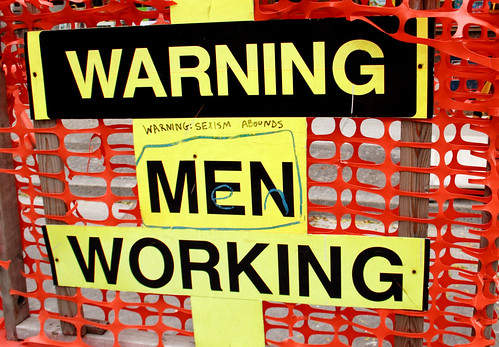
There is little doubt that there’s discrimination towards men. They do, in fact, make up the majority of inmates in prisons and work some of the most dangerous jobs in society. I was surprised to learn about a men’s rights movement in class. I think because I was under the impression that men have it made when it comes to getting good job positions. But then I understood that it was about more than just being a man. It was also about being a member of a particular race and social class too.
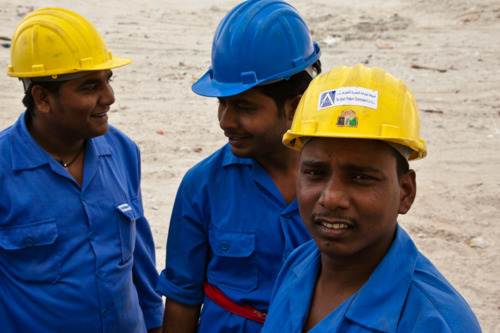
Usually race and social class are in correlation with each other. White men, when they aren’t in their home countries, tend to have better jobs than Indians in other countries, such as Qatar. Indian men in Qatar usually work as laborers or cleaners, not very glamorous jobs. There are those few Indian men who have good job positions but that’s mainly because they were raised in upper-class households. But in countries such as the U.S. there are white men who work in job industries such as construction or sanitation. There isn’t really an issue of pay with these types of jobs, but with the quality of the jobs.



We learned in class that there are three categories of men. There are some who are “soft” and sensitive, traditional and aggressive, and those who are a hybrid masculine. In society today, hybrid masculinity is accepted in comparison to men being sensitive or aggressive. Hybrid masculinity associates both muscle and compassion; so portraying a tough guy image, but also being caring and considerate of others.
We talked about different celebrities in class who fall under each category of men. Tupac was categorized as being hybrid masculine, while Bruno Mars and Twilight star, Robert Pattinson, almost fell short of being called men. However, I read in our sociology textbook that men in power, who have affairs with women, while they are married, tend to be seen as more manly. While sexual scandals can boost the masculinity of a man, physically abusing women will most definitely demean it.


The incident between Chris Brown and Rihanna in 2009 caused many people to dislike Chris Brown. Prior to them dating, he was pretty much a heartthrob and girls swooned over his music, particularly his very emotional lyrics directed at females.

“You changed my whole life
Don't know what you’re doing to me with your love
I'm feeling all Super human
You did that to me
Super human heart beats in me
Nothing can stop me here with you, superhuman”
These lyrics are from one of his songs called “Superhuman.” It’s kind of hypocritical that he can sing these kinds of songs yet still beat up his own girlfriend. Ever since the incident he was targeted in the media and became the butt of many jokes. The fact that he could hit a woman could have been an action to boost his masculinity, yet it backfired. Even today, Chris Brown continues to attempt to sweep women off their feet. Although many women were against his actions and it stirred up controversy over abuse, other women still continued to be “fan girls” and listen to his music.

Overall, what I learned is that men have rights too. Despite that they’re the ones who have the top positions in almost all kinds of work.


